


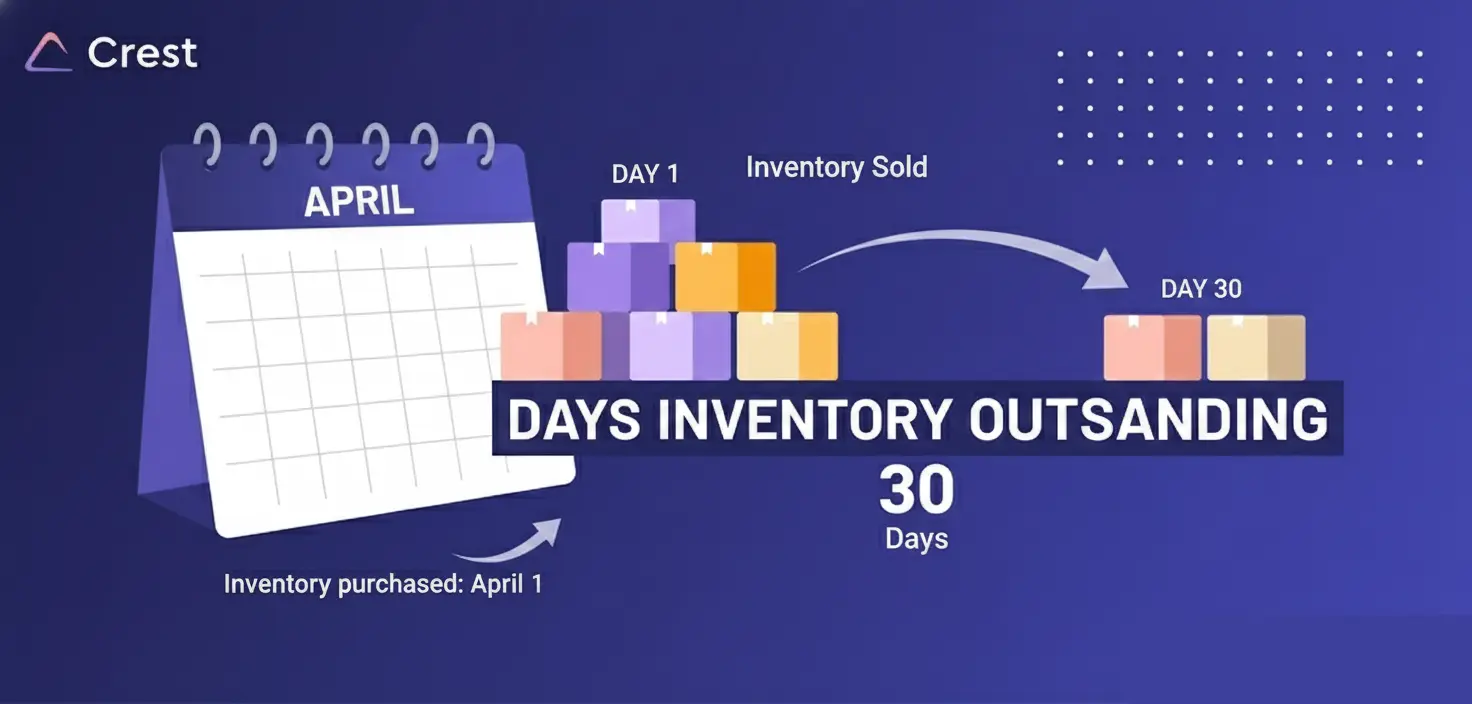

Inventory has a habit of pretending it is productive. It sits in warehouses, shows up as an asset on the balance sheet, and quietly absorbs cash while everyone focuses on revenue.
Days Inventory Outstanding (DIO) is the metric that removes the disguise.
DIO shows how efficiently inventory is being converted into sales. More importantly, it reveals how disciplined decision-making really is across planning, purchasing, and execution.
What Is Days Inventory Outstanding (DIO)?
Days Inventory Outstanding measures the average number of days inventory is held before it is sold or consumed.
In practical terms, DIO answers this question:
How long does it take to turn inventory investment back into cash?
A rising DIO usually means inventory is moving slower than expected. A declining DIO suggests faster turnover and improved working capital efficiency.
The Standard Formula for Calculating DIO
The most widely used formula is:

This formula is simple, but accuracy depends on how each component is calculated.
How to Calculate Each Component Correctly
1. Average Inventory
Average inventory smooths out fluctuations over a period and is calculated as:

For businesses with large swings in inventory levels, a rolling average using monthly or weekly data provides better insight.
2. Cost of Goods Sold (COGS)
COGS represents the direct cost of goods sold during the same period used for inventory.
Example DIO Calculation
Assume the following over one year:
- Opening inventory: 8,000 units
- Closing inventory: 12,000 units
- Average inventory: 10,000 units
- Annual COGS: 60,000 units
Now calculate DIO:
DIO = (10,000 ÷ 60,000) × 365
DIO ≈ 61 days
This means inventory takes roughly two months to convert into revenue.
That number is neither good nor bad on its own. Context decides.
How to Interpret DIO Meaningfully
DIO should never be viewed in isolation. It must be interpreted alongside demand patterns, service-level expectations, and supply constraints.
Low DIO Indicates:
- Faster inventory movement
- Strong alignment between demand and supply
- Lower holding and carrying costs
But if DIO is too low, it may indicate understocking and service-level risk.
High DIO Indicates:
- Slow-moving or excess inventory
- Over-forecasting or conservative replenishment
- Increased holding costs and higher risk of obsolescence
The goal is not the lowest possible DIO.
The goal is a DIO that balances availability with capital efficiency.
Relationship Between DIO and Inventory Turnover
DIO and inventory turnover are inversely related.


If turnover improves, DIO declines.
If turnover slows, DIO increases.
Tracking both together provides a clearer operational picture.
Common Reasons DIO Increases
DIO tends to rise gradually, not suddenly. Common contributors include:
- Forecasts that rely heavily on historical averages
- Long or unpredictable supplier lead times
- Excess safety stock added without regular review
- Poor visibility across inventory locations
- Products with declining demand that remain in replenishment cycles
High DIO is usually the result of many small decisions compounding over time.
Practical Ways to Improve DIO
Improving DIO does not require aggressive stock reduction. It requires better decisions.
Improve Forecast Accuracy
Incorporate recent demand signals and review forecasts frequently, especially for high-value items.
Segment Inventory
Not all inventory deserves equal treatment. Fast movers, slow movers, and obsolete stock must be managed differently.
Review Replenishment Policies Regularly
Static reorder points and safety stock levels lose relevance quickly in dynamic environments.
Increase Inventory Visibility
DIO often improves simply by reallocating inventory instead of replenishing it.
Monitor Trends, Not Just Averages
A stable DIO is usually healthier than a volatile one, even if the average looks acceptable.
Why DIO Is a Critical Metric
Days Inventory Outstanding connects planning decisions to financial outcomes. It highlights how effectively inventory investment supports demand without excessive risk.
When DIO is managed well, cash flow improves, operations stabilize, and growth becomes easier to sustain.
When it is ignored, inefficiencies accumulate quietly until they become expensive.
Conclusion:
Days Inventory Outstanding is not just a performance indicator. It is a reflection of how well inventory decisions align with reality.
Calculate it correctly. Track it consistently. Use it to guide action rather than explanation.
Inventory does not become a problem overnight.
DIO tells you long before it does.


